

Children don't build self-confidence through praise. They build it through experience. Through situations where they genuinely figured something out on their own. Albert Bandura*, psychologist at Stanford University and one of the most cited researchers in his field, coined the term self-efficacy for exactly this: the belief in one's own abilities, built not from encouragement from the outside, but from concrete personal experience.
That sounds like big moments. In practice, it's small ones: tidying a shelf, finding the right Tonie figure, starting the Toniebox without help. Giving children the space to take ownership of exactly these kinds of daily routines lays the foundation for real self-confidence.
When Helping Becomes a Habit
Parents step in because they want to help. Time pressure, impatience, the desire to avoid frustration. That's understandable. But when children repeatedly experience adults taking over before they've had a chance to find their own solution, a quiet assumption takes hold: I need someone else to get this done.
Bandura showed that what he called Mastery Experiences, the firsthand experience of one's own competence, are the single most important source of self-confidence in childhood. Not encouragement from others, but the personal experience of: I did that myself. When children are consistently denied these moments, it leaves a gap. Not a visible one, but one that makes itself felt.
Small Structures That Work Every Day
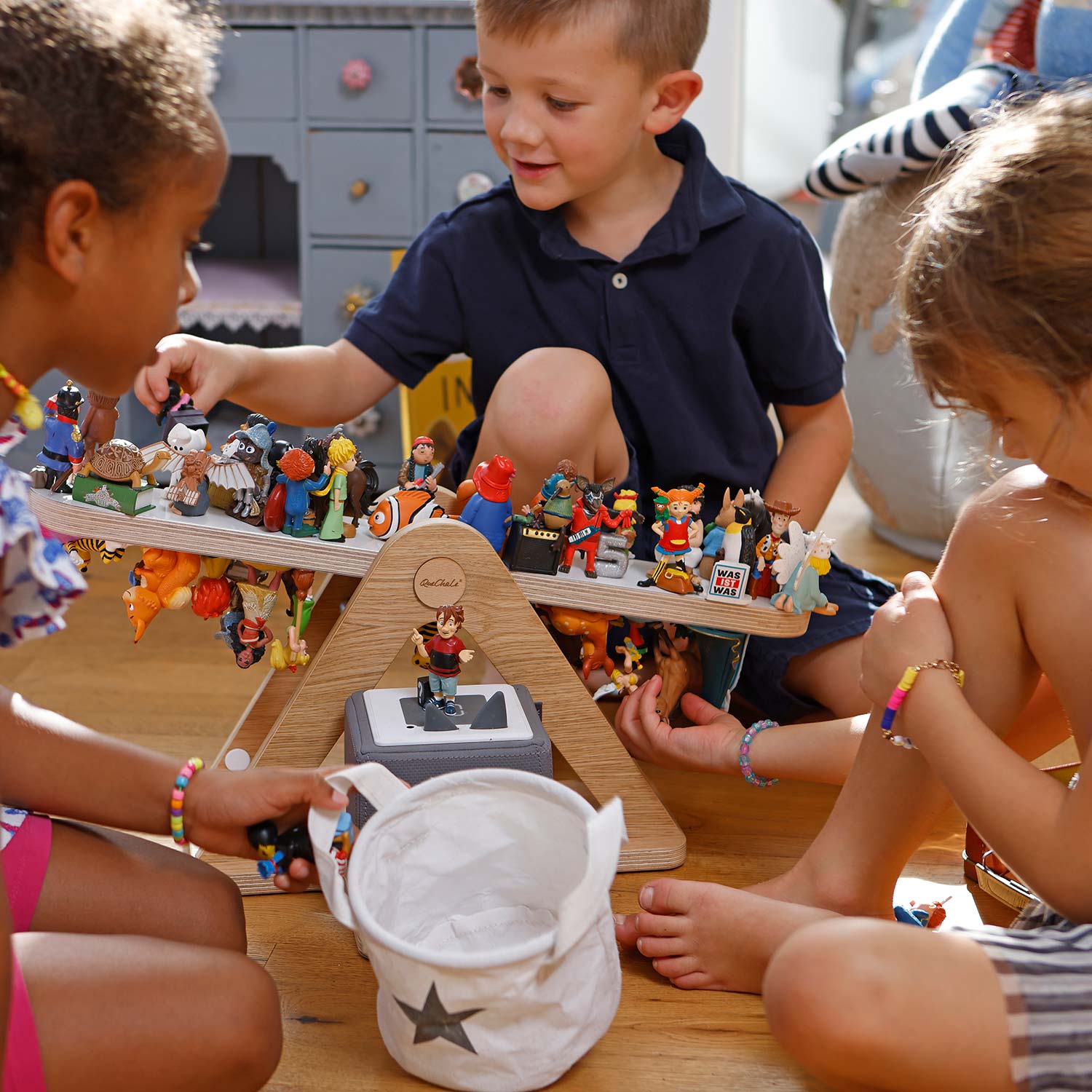
This is where the Tonie shelf comes in. Not as a pedagogical concept, but as an everyday system. A Tonie shelf that children can genuinely use on their own gives every Tonie figure a fixed place. The child sees what's available, makes a choice, places the figure on the Toniebox and puts it back afterwards. No long search, no adult needed.
These routines are simple. But they repeat themselves every day. And that repetition is exactly what makes them work. Choose, listen, put away, alone. A Tonie shelf creates the conditions for this because it's a system children intuitively understand and can operate independently.
What This Means in the Long Run
Self-confidence doesn't develop in a single moment. It accumulates from many small experiences over weeks and months. A child who experiences daily that they can manage their own audio story time develops something concrete from that: the conviction that they can.
That's not a major pedagogical leap. It's a small one. But one that repeats itself.
What Actually Matters in a Tonie Shelf
Not every Tonie shelf makes this possible. What counts is that children can genuinely access it on their own: the right height, open compartments, an arrangement that makes order visible at a glance.
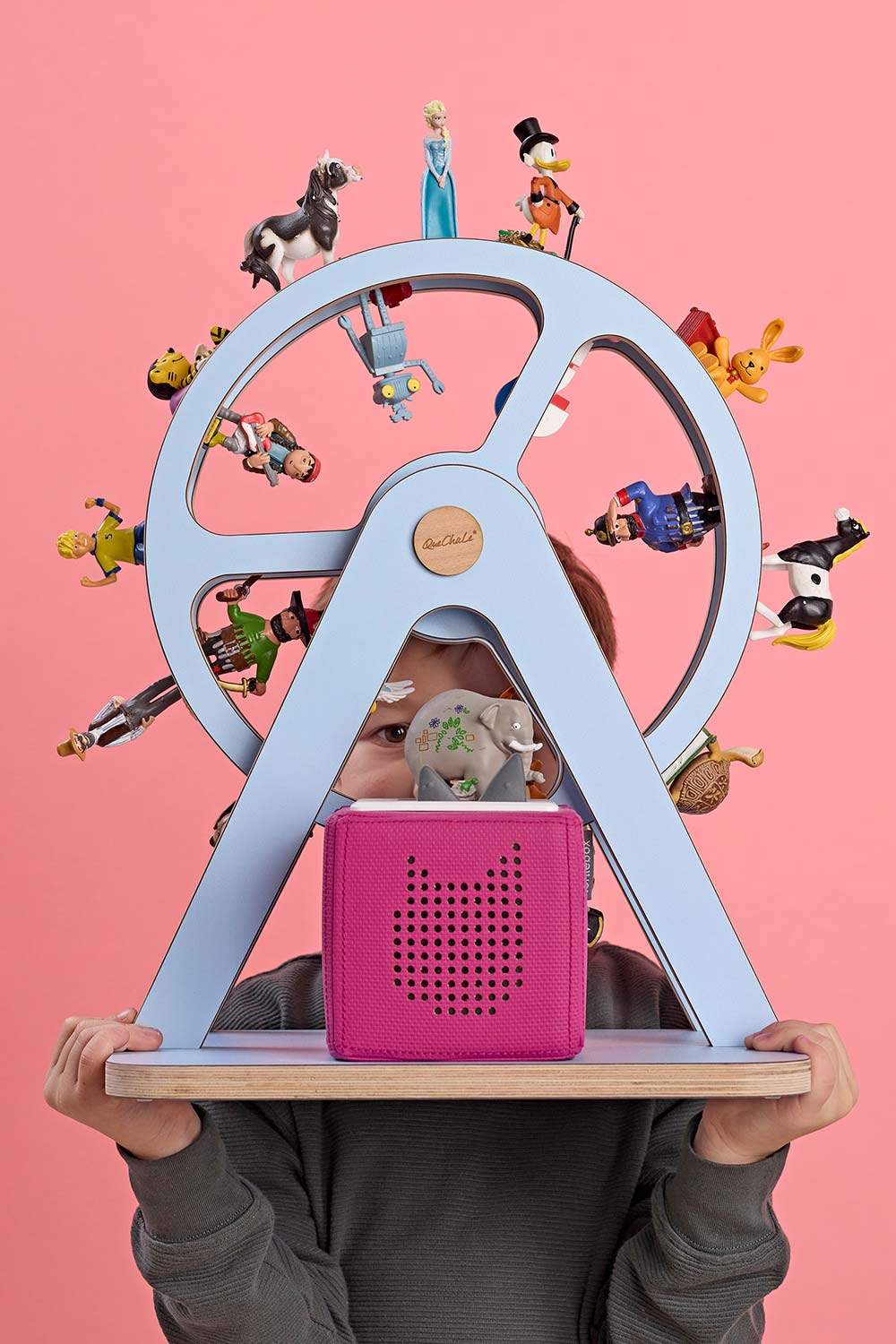
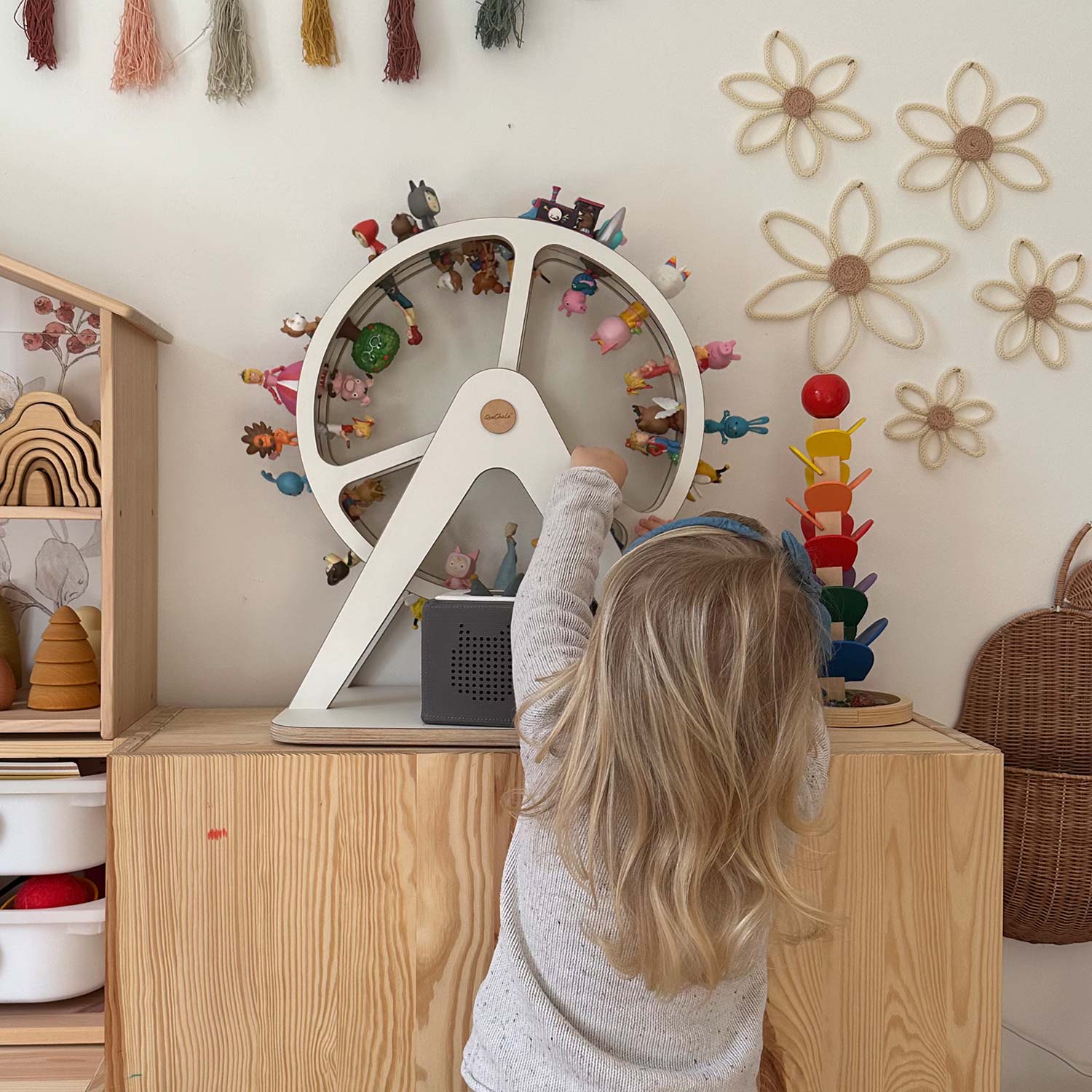
Our Tonie Wheel shows at a glance which Tonies are available. No explanation needed, no adult required. The child sees, reaches, listens, puts back. The same applies to the classic Tonie shelf in the Piccolo and Classic sizes: open compartments, clear structure, at child height. The difference between a shelf that parents tidy and one that children use themselves isn't an aesthetic one. It's a functional one.
Conclusion
Children don't need big wins. They need a lot of small ones. The Tonie shelf isn't a parenting tool, it's a framework: it creates the opportunity for children to take charge of their own audio story time, every day, without pressure and without judgment. Stepping back and creating clear structures instead gives children something that stays with them. The experience of having done it themselves.
Browse our shop to find Tonie shelves designed to do exactly that.
* Source: Bandura, A. (1977). Self-efficacy: Toward a unifying theory of behavioral change. Psychological Review, 84(2), 191–215. URL: https://pubmed.ncbi.nlm.nih.gov/847061/

Share this article:
Tonie Shelf for Easter: More Order for Tonies